A diver can inspect a structure only within the limits of air, pressure, visibility, and safe access. An underwater robot can stay below the surface longer, send video to a control room, and reach places that may put a person at risk.
That makes underwater robots useful for more than research. They now support inspection, repair planning, search work, and data collection in ports, rivers, offshore sites, and the open sea.
- Longer work time: A remotely operated vehicle can keep working while its surface crew manages power and control.
- Safer inspection: Cameras and sonar can check structures before a diver enters the water.
- Better records: Digital images and sensor data let teams compare the same site over time.
What underwater robots do
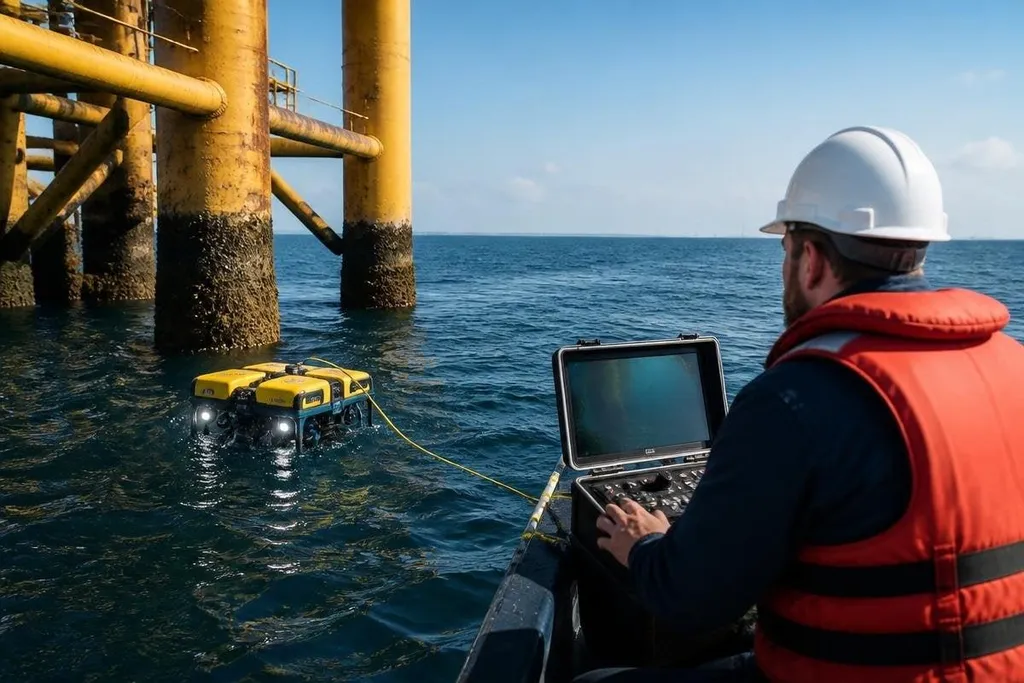
Most underwater robots fall into two groups. A remotely operated vehicle, or ROV, gets power and control through a tether. An autonomous underwater vehicle, or AUV, follows a planned route with little or no live control from the surface.
The tether gives an ROV a steady link for video, commands, and power. That suits close inspection, cutting, lifting, and other work where an operator needs to react to what the camera shows. The cable can snag, though, and a surface vessel must stay with the robot.
An AUV carries its own battery and uses sensors to track its position underwater. It can map the seafloor or scan a long section of pipe, then return with stored data. It cannot depend on a normal radio link because radio signals travel poorly through seawater, so operators often receive little live information during a mission.
That split matters when a team picks a robot. An ROV works like a remote tool at the end of a cable. An AUV works more like a survey vehicle that follows a route and reports after the run.
Why the need is growing
Underwater infrastructure is hard to see and expensive to reach. Ports have submerged walls, cables, pilings, and ship berths. Offshore energy sites use foundations, anchors, pipelines, and subsea connectors.
Damage can stay hidden until it affects safety or stops work. Robots let crews inspect these areas without sending a diver into every first check.
A camera can show corrosion, loose parts, or marine growth. Sonar can create a view when the water is too dark or cloudy for ordinary video. A robotic arm can also place a tool against a surface while the operator watches the result.
The data has value after the robot leaves the water. Teams can compare images from different inspections, mark changes on a map, and plan a repair around the actual condition of the structure. That can reduce guesswork, though it doesn't remove the need for skilled divers or engineers.
An underwater inspection report matters most when it records the robot, site, date, and fault that shaped the result. Underwater robotics reporting can put those details beside claims about port and offshore inspections before the next section looks at where these machines still need people.
Where the limits still show
Water blocks more than radio signals. It also reduces visibility, affects sensor readings, and makes position tracking harder. An underwater robot may need sonar, inertial sensors, depth readings, and a surface reference to estimate where it is.
Currents add another problem. A tethered robot can move away from a target when the current pulls the cable. An AUV can drift from its planned path or spend extra battery power correcting its course. A strong camera image does not fix a bad position record.
The robot also needs a clear task. Inspection teams must decide what to measure, how close the robot should fly to the structure, and what evidence counts as a defect. A machine can gather more images than a team can review unless the job has a clear plan.
I’d choose an underwater robot first for work that is risky, repetitive, or hard to reach, then keep a diver in the process where touch, repair, or judgment is still needed.
A practical choice guide
Use these checks before selecting a system:
- Set the task: Choose inspection, mapping, sampling, recovery, or repair before comparing machines.
- Check the water: Record depth, current, temperature, visibility, and likely obstacles.
- Pick control: Use an ROV for live work; consider an AUV for planned survey routes.
- Plan the data: Decide how video, sonar, position, and inspection notes will be stored.
- Keep a fallback: Prepare a diver plan or recovery method if the robot loses power, control, or its tether.
The next step is better coordination between robots, divers, and inspection software. Underwater robots won't remove the hard parts of marine work, but they can put useful data in front of the right person before the riskiest work begins.